Should You Take CoQ10 for fertility?

– 5 min read

Coenzyme Q10, usually just called CoQ10, is a compound your body makes naturally in almost every cell. Its main job is helping tiny structures inside your cells called mitochondria turn food and oxygen into usable energy.
Think of mitochondria as the power plants of the cell, and CoQ10 as the spark plug that keeps them running efficiently.
CoQ10 has a second job too. It works as an antioxidant, mopping up the waste products that energy production leaves behind before they can damage the cell around them (Peixoto de Barcelos and Haas, 2019).
CoQ10 is a natural compound that powers the energy centres inside your cells and also works as an antioxidant, and levels decline with age, which may affect egg quality since eggs need huge amounts of energy to mature and divide properly.
•A 2024 meta analysis of 20 trials across 2,617 women found CoQ10 significantly increased egg numbers, embryo quality, and pregnancy odds, particularly in women with ovarian ageing
•A randomised trial in young women with poor ovarian reserve found CoQ10 doubled the number of eggs retrieved and improved fertilisation rate and embryo quality
•Not every study agrees: a 2021 review found CoQ10 improved the environment around the egg without reliably improving egg quality itself or final pregnancy rates
•Food alone will not get you close to research doses. The average diet provides just 3 to 5mg a day, while studies used 30 to 600mg
•Speak to your GP or fertility specialist before supplementing, especially if you take other medication
Your takeaway: CoQ10 is safe, well studied, and biologically plausible as a support for egg quality, particularly as ovarian reserve declines with age, but it does not guarantee a better outcome for any individual woman. Ask your doctor whether it fits your situation, and remember it is one small piece of a much bigger picture that includes your diet, stress, sleep, and underlying reproductive health.
Egg cells are some of the most energy hungry cells in the entire body. They are packed with far more mitochondria than most other cells, because maturing properly, and later dividing correctly after fertilisation, takes an enormous amount of power.
As we age, the body naturally produces less CoQ10, and the theory is that the power plants inside our eggs may become a little less efficient as a result.
Fewer resources for the egg to draw on could be part of why egg quality tends to decline with age (Peixoto de Barcelos and Haas, 2019).
That theory is what has made CoQ10 one of the most researched supplements in fertility science. So what does the actual evidence say once you look past the wellness headlines?
The strongest evidence comes from a 2024 meta analysis that pooled 20 randomised controlled trials across 2,617 women experiencing ovarian ageing.
It found that antioxidant supplementation, particularly CoQ10, significantly increased the number of eggs retrieved and the rate of high quality embryos during IVF.
When the researchers looked at CoQ10 specifically, women taking it had more than double the odds of clinical pregnancy compared to those who did not, and this effect held even after accounting for dose and treatment length. Lower doses taken consistently for around three months tended to outperform higher, shorter courses (Shang et al., 2024).
A closer look at an individual trial adds useful texture. In a randomised study of 186 women under 35 with a diagnosed poor ovarian reserve, those who took CoQ10 for 60 days before IVF retrieved twice as many eggs, had a notably higher fertilisation rate, and produced more high quality embryos than those who received no treatment. Far fewer of them had their embryo transfer cancelled for lack of viable embryos too (Xu et al., 2018).
None of this means the case is closed.
A thorough 2021 review of the human evidence found that while CoQ10 does seem to create a more favourable environment inside the ovarian follicle, this benefit did not reliably carry through to the egg itself, and no study reviewed found a clear improvement in final pregnancy rates.
The authors were candid that the current data simply does not prove CoQ10 improves human egg quality, even though the underlying biology remains genuinely promising (Rodríguez-Varela and Labarta, 2021).
Put plainly, the research suggests CoQ10 may help set the stage for a healthier egg to develop, without guaranteeing the outcome anyone actually cares about. That distinction matters, and it is one worth sitting with rather than glossing over.
The doses used across the fertility trials sit well above what most of us get from food.
The studies showing benefit ranged from around 30mg a day taken consistently, up to 600mg a day for shorter courses. Compare that with the average diet, which provides somewhere between 3 and 5mg of CoQ10 daily, mostly from meat and poultry (Weber, Bysted and Hølmer, 1997).
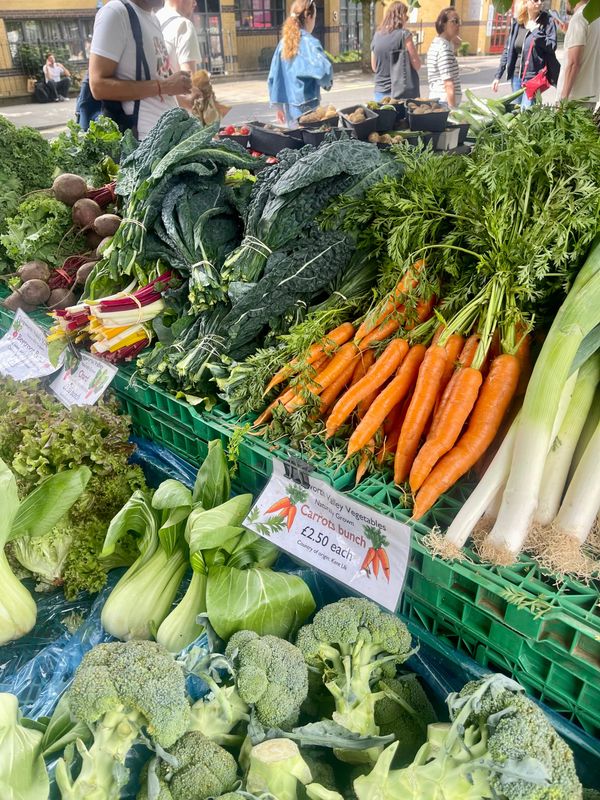
Organ meats and oily fish are the richest natural sources, but even a CoQ10 conscious plate will not come close to trial level doses.
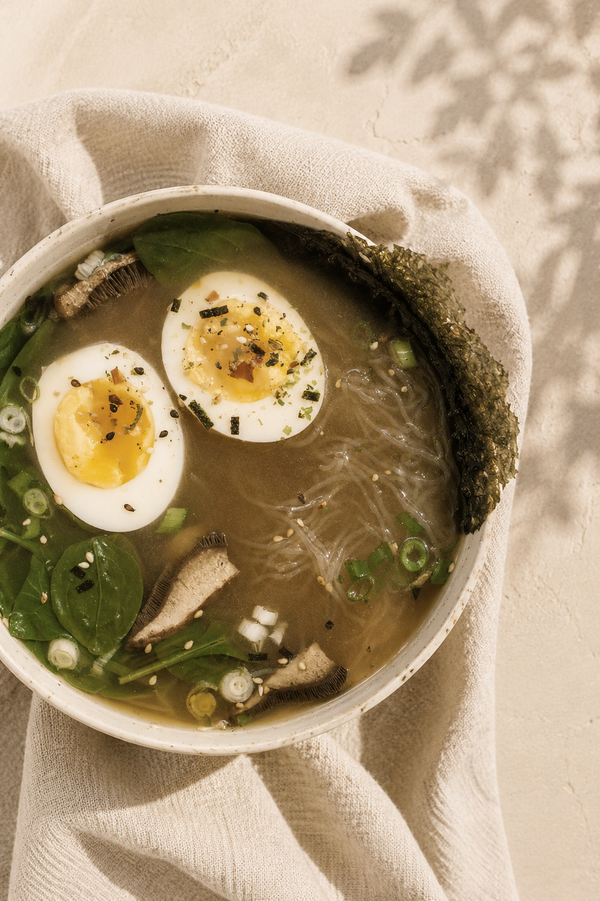
Frying also destroys a meaningful portion of the CoQ10 in food, so gentler cooking methods like poaching or steaming preserve more of it (Weber, Bysted and Hølmer, 1997; Pravst, Žmitek and Žmitek, 2010).
In the UK, CoQ10 sits in an unusual middle ground. It is sold as a food supplement rather than a licensed medicine, which means there is no official recommended daily amount and no NICE guidance either way. That is not a reflection of weak evidence so much as it reflects that CoQ10 is not classified as an essential nutrient.
It does mean quality and dosing can vary quite a bit between brands, so choosing a product that has been third party tested is a reasonable precaution.
If you are considering CoQ10 as part of trying to conceive, the most sensible next step is a conversation with your GP or fertility specialist, particularly if you are on any other medication, since CoQ10 can interact with blood thinners. The science here is genuinely encouraging, but it is not a guarantee, and it works best as one part of a broader picture of your reproductive health rather than a single fix.
The science on CoQ10 and fertility sits somewhere between promising and proven, and that middle ground is worth sitting in rather than rushing past. What we can say with real confidence is that CoQ10 is safe, well studied, and biologically plausible as a support for egg quality, particularly as ovarian reserve declines with age.
What we cannot say yet is that it guarantees a better outcome for any individual woman. If you are trying to conceive, that nuance matters more than a headline. Read the research, ask your doctor whether it makes sense for your own situation, and remember that supplementation is one small piece of a much bigger picture that includes your overall diet, stress, sleep, and underlying reproductive health.
Peixoto de Barcelos, I. and Haas, R.H. (2019) 'CoQ10 and aging', Biology, 8(2), Article 28. https://doi.org/10.3390/biology8020028
Pravst, I., Žmitek, K. and Žmitek, J. (2010) 'Coenzyme Q10 contents in foods and fortification strategies', Critical Reviews in Food Science and Nutrition, 50(4), 269–280. https://doi.org/10.1080/10408390902773037
Rodríguez-Varela, C. and Labarta, E. (2021) 'Does coenzyme Q10 supplementation improve human oocyte quality?', International Journal of Molecular Sciences, 22(17), 9541. https://doi.org/10.3390/ijms22179541
Shang, Y., Song, N., He, R. and Wu, M. (2024) 'Antioxidants and fertility in women with ovarian aging: a systematic review and meta-analysis', Advances in Nutrition, 15(8), Article 100273. https://doi.org/10.1016/j.advnut.2024.100273
Weber, C., Bysted, A. and Hølmer, G. (1997) 'The coenzyme Q10 content of the average Danish diet', International Journal for Vitamin and Nutrition Research, 67(2), 123–129.
Xu, Y., Nisenblat, V., Lu, C., Li, R., Qiao, J., Zhen, X. and Wang, S. (2018) 'Pretreatment with coenzyme Q10 improves ovarian response and embryo quality in low-prognosis young women with decreased ovarian reserve: a randomized controlled trial', Reproductive Biology and Endocrinology, 16, 29. https://doi.org/10.1186/s12958-018-0343-0