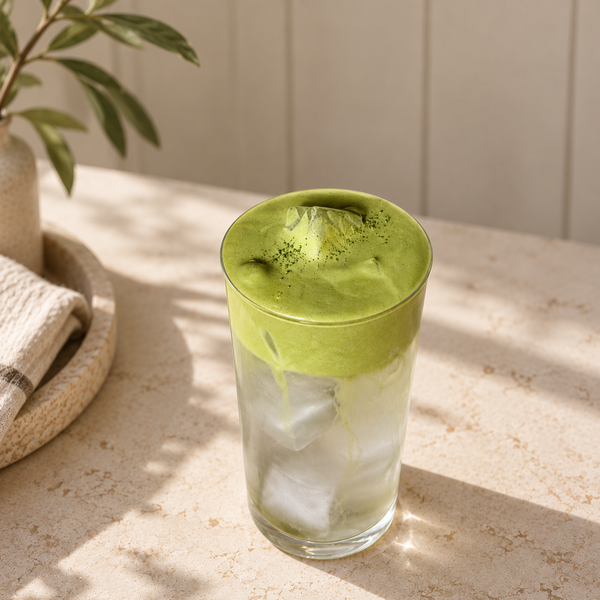
On the mornings when you want something light, refreshing and hydrating, this is the drink to reach for. With a short ingredient list and just a blender required, this is a simple, juicy and delicious drink to have at the start of your day, or before or after a workout. That is what Ella’s matcha hydrator is for.
Ella starts her mornings with a whole lemon in water, then makes this green glow drink before an infrared HEAT class, so she goes into a sweaty session already hydrated. It is made with coconut water, matcha, aloe, spinach and collagen peptides, and it is one of her favourite recommendations to clients. Here is how it comes together, and what each ingredient actually brings.
What You Need
- 600ml coconut water
- 1 teaspoon matcha
- 2 to 3 tablespoons aloe vera flesh (food grade inner gel)
- a handful of spinach (about 30g)
- 10g collagen peptides
How To Make It
Add everything to a blender and blend until smooth. Amounts are a guide, so adjust to taste. Makes one large serving.
What Each Ingredient Brings
Coconut Water: Coconut water is a source of potassium, which is lost in smaller amounts through sweat, so it works well as a hydrating base around a workout. In a small randomised trial of 12 exercise trained men, coconut water rehydrated them after exercise about as well as plain water and a sports drink (1), so it is best seen as a tasty, hydrating base rather than something that hydrates better than water.
Matcha: Matcha brings antioxidants, caffeine and L-theanine, an amino acid found in tea. In one study, L-theanine and caffeine taken together were linked to feeling more alert and less tired (2). Anyone who is pregnant should count the caffeine in matcha towards the UK limit of 200mg a day, and the amount varies between products, so check the label (3).
Spinach: A handful of spinach adds folate, magnesium and some iron.
Aloe: Aloe flesh is the clear inner gel of the leaf, and it is the only part used here. Choose a food-grade product made from the inner gel, not whole leaf extract or the latex from the outer layer, which have been linked to side effects. Aloe may also be unsafe in pregnancy or breastfeeding and can interact with some medicines, so check with a GP or pharmacist first if that applies (4).
Collagen Peptides: A meta analysis of 19 randomised trials, most of them testing collagen based products, found that oral peptides improved skin hydration, though the trials varied in the type and dose used (5).
The boops Takeaway
Quick to blend, refreshing to drink and easy to adjust to taste, the matcha hydrator is a simple way to start the day hydrated. It works best as part of a balanced routine rather than a quick fix, so keep drinking water through the day too. Most of the pleasure is in having something light, juicy and new, with extras like collagen and matcha.
References
(1) Kalman, D.S., Feldman, S., Krieger, D.R. and Bloomer, R.J. (2012) 'Comparison of coconut water and a carbohydrate-electrolyte sport drink on measures of hydration and physical performance in exercise-trained men', Journal of the International Society of Sports Nutrition, 9(1), 1. Available at: https://doi.org/10.1186/1550-2783-9-1
(2) Haskell, C.F., Kennedy, D.O., Milne, A.L., Wesnes, K.A. and Scholey, A.B. (2008) 'The effects of L-theanine, caffeine and their combination on cognition and mood', Biological Psychology, 77(2), pp. 113–122. Available at: https://doi.org/10.1016/j.biopsycho.2007.09.008
(3) NHS (2026) Foods to avoid in pregnancy. Available at: https://www.nhs.uk/pregnancy/keeping-well/foods-to-avoid/ (Accessed: 30 October 2026).
(4) National Center for Complementary and Integrative Health (no date) Aloe vera: usefulness and safety. Available at: https://www.nccih.nih.gov/health/aloe-vera (Accessed: 27 October 2026).
(5) Nukaly, H.Y. et al. (2026) 'Oral and topical peptides for skin aging: systematic review and meta-analysis of randomized controlled trials', Frontiers in Medicine, 13. Available at: https://doi.org/10.3389/fmed.2026.1618306